

By Anika Jacob, J.D. Candidate 2027, First Place Winner, Human Rights Essay Contest 2026
I. Introduction
Lakshmi Senthilnathan, a Keralite domestic worker working in Muscat for more than ten years, characterizes months without pay as a normal aspect of labor, something that many women in her society silently endure while still working.[1] Lakshmi’s casual account of these losses, framed as the price of her kids’ education, illustrates how prolonged nonpayment becomes commonplace when workers’ ability to make ends meet depends on their continued employment.[2] Lakshmi is one of millions of Keralite workers who have made the journey to the Gulf over the past five decades, sustaining one of the most significant labor movements in South Asia.[3] Rooted in the historical, commercial, and cultural ties along the Malabar Coast, this migration began in the 1940s after the discovery of oil in the Gulf and the region’s rapid economic expansion.[4] Initially, it was primarily unskilled or semi-skilled male laborers who migrated to work in construction and other labor-intensive sectors.[5] Over time, this migration has become more gender-diverse, with women forming a significant share, especially in domestic labor.[6]
Now, construction workers are experiencing wage theft[7] and a lack of compensation[8], while domestic workers in Gulf nations continue to face physical abuse, nonpayment of wages, and confinement under the kafala system.[9] The 2024 fire in Kuwait, which killed fifty Indian construction workers—twenty-four of them from Kerala—exposed the unsafe and degrading living conditions that many Gulf migrants endure daily.[10]
These ongoing legal violations of wage theft under this system demonstrate the inadequacy of the overarching Act of India’s Emigration Act that governs this process, as it neither addresses the violations nor offers legal redress beyond recruitment oversight and pre-departure contract submission.[11] Consequently, it is the migrant workers from Kerala who remain vulnerable to wage theft with limited access to justice at home or abroad.[12]
This article argues that India’s Emigration Act of 1983 structurally enables wage theft experienced by Keralite domestic and construction workers in the Gulf by regulating departures without imposing enforceable obligations on host nations or offering domestic mechanisms for recovery upon return. Section II traces the historical and legal development of Kerala-Gulf migration and the kafala system that governs it. Section III examines how the Emigration Act’s structural provision facilitates wage theft among Keralite domestic and construction workers, using COVID-19 and the 2022 FIFA World Cup as case studies to illustrate the exposure without reform. Section IV analyzes the Philippines’ Migrant Workers and Overseas Filipinos Act of 1995 as a comparative model, identifying the features that India’s framework should implement. Finally, Section V proposes reforms that align India’s emigration regime with international human rights and labor standards.
II. Background and Development
A. Historical Context of Kerala-Gulf Migration
i. Origins of the Migration
The labor movement from Kerala to the Gulf, which became a significant socioeconomic phenomenon since the mid-1970s, was caused by the combination of local forces in Kerala and pull factors in the oil-rich Gulf nations.[13] However, in the 1950s, political unrest, trade union violence, and a lack of private investment hurt the state’s agricultural base.[14] Many landowners, small business owners, and jobless workers sought employment overseas as a result of the drastic land reforms of the 1960s and 1970s.[15]
ii. Early Migration of Workers
This coincided with the “oil boom” in the Middle East, where there was a massive expansion of construction and service-sector demand in oil-rich Gulf states.[16] Thousands of Keralites migrated to these states to take advantage of these new employment opportunities.[17] By the mid-1990s, remittances from these workers changed household expenditures, finances, and the state’s growth trajectory by contributing between 20-25% of Kerala’s Net State Domestic Product.[18]
iii. Changing Demographics of Migrant Workers
Initially, male construction workers drove Kerala’s Gulf migration in response to oil-driven hiring demands.[19] Later decades, however, saw a rise in female migration associated with domestic and caregiving responsibilities as Gulf economies expanded their demand for flexible, low-cost care labor. [20] Kerala’s cultural preconceptions of women as caregivers and the state’s relatively high rates of female literacy and education, in addition to economic factors, made it possible for these women to seek semi-skilled jobs abroad in the Gulf states.[21] Even as their skills became indispensable to households and service sectors in the host country, female migrants from Kerala frequently faced persistent disadvantages, such as restricted access to legal safeguards, which predisposed them to abuses.[22] However, empowerment remained limited and controlled by deeply ingrained patriarchal systems.[23] Migrant domestic workers in the Gulf continue to face harsh mobility limitations, surveillance, and the possibility of deportation if they attempt to quit abusive employers under the kafala system.[24] Moreover, many were misled about their employment, charged recruiting fees, or denied real access to justice, demonstrating how institutional processes and patriarchal norms, which devalue domestic labor as “women’s work,” interact to restrict women’s autonomy.[25]
B. Development of the Kafala Sponsorship System
i. Origins and Purpose
The conditions in which these male and female workers continue to live are not shaped only by the economic demand of their host country, but are also framed by the legal framework of the Gulf, known as the “kafala system,” which institutionalizes dependence and facilitates legal abuse.[26] Under kafala, employers frequently confiscate phones and passports, limit employees’ freedom of movement, impose disproportionately extended work hours without paying overtime, withhold wages, and confine employees to accommodation provided by the employer, making it difficult for them to change employment, report misconduct, or go home without authorization.[27]
The British colonial government and Islamic legal notions of guardianship are the origins of the kafala system, which developed in the Gulf states to control immigrant workers.[28] The system grew to handle the flood of temporary workers required for large-scale infrastructure and oil projects by the 1950s as Gulf countries became wealthier from oil.[29] As laws and economic interests changed over time, this safeguard became a weapon that firmly tied workers’ employment and residence to their sponsors, resulting in structural imbalances that left migrants vulnerable to abuse, with their legal status, mobility, and even basic rights dependent on the will of their employers rather than the state.[30]
ii. Mechanics of Control
The host nation ties a migrant worker’s visa, residency, and employment rights to their employer, also referred to as their “kafeel” or “sponsor” under the kafala system.[31] In reality, this arrangement results in a stark power imbalance that makes workers dependent on their sponsors for their livelihoods, security, and legal status.[32] Under this arrangement, workers cannot leave the country or change approvals without sponsor approval, and those who do risk criminal penalties, including deportation.[33]
The kafala system’s control mechanisms are strengthened by actions like passport seizure, delayed wages, and stringent limits on mobility.[34] The prevalence of contracting chains and “pay-when-paid” procedures[35], in which employers and subcontractors postpone payments, leaving the lowest-tier workers underpaid for months, makes construction workers particularly susceptible.[36] Additional hazards of abuse for domestic workers, particularly women, include physical, verbal, and sexual harassment, imprisonment in the houses of their employers, and denial of time off or rest days.[37]
C. India’s Emigration Act of 1983: Regulatory Framework for Migrant Workers
i. Scope and Limitations
India’s Emigration Act of 1983 was enacted to regulate the migration of Indian migrant contract workers for overseas employment, but it focuses mainly on licensing recruitment agents, emigration clearance, and pre-departure contracts, without any significant labor protection clauses.[38] According to the Act, only recruitment agents that have obtained an authorization certificate from the Protector General of Emigrants (PGE) and are registered with the Ministry of Labor and Employment are permitted to hire people abroad.[39] While the Act intended to protect Indian emigrant workers from fraudulent recruitment, in practice, it functions more as a regulatory tool than a rights-based framework, emphasizing administrative control rather than worker welfare.[40]The 2009 amendment did not address vital employment protections, leaving questions such as wage theft unregulated.[41]
ii. Impacts Highlighted During the COVID-19 Pandemic
The inadequacy of this Act became clearer during the COVID-19 pandemic.[42] The lockdowns, travel bans, and suspension of economic activity across the Gulf are disproportionately affecting sectors where workers were concentrated, prompting large numbers of people to return to India.[43] In May 2020, large-scale repatriation began under the Vande Bharat Mission, in which demand exceeded state capacity, with more than one million repatriation requests recorded by September 2020, the majority originating from Gulf Cooperation Council countries.[44] Specifically, many Kerala return migrants reported job loss and wage theft, while only a small minority reported receiving guidance or assistance in pursuing claims for it.[45] In 2021, India’s Foreign Ministry reduced the minimum wage for Gulf-bound workers, effectively cutting one of the few protections offered by the law, making migrants more vulnerable to underpayment and contract pressure.[46] Furthermore, many workers reported being stranded for months with unpaid wages and confiscated passports, where individuals were unpaid for five months.[47]
III. Analysis
A. Systemic Wage Theft Among Kerala Migrant Workers
The most prominent and persistent exploitation of Kerala workers in the Gulf has been the act of wage theft, constituting both a breach of contract and a violation of human rights across various sectors.[48] More often than not, it is the women who work in domestic jobs and men who work in construction who are disproportionately impacted, making them easily susceptible.[49]
i. Legal Exclusion of Domestic Labor
Making up fourteen percent of Kerala’s emigrant population[50], many Keralite women seek work in Arab nations, such as Kuwait and Saudi Arabia, due to the high demand for house workers.[51] Despite this demand and the vast roles of cooking, cleaning, and caring for their employers that they take on, they are valued the least.[52] Specifically, wage theft is uniquely difficult to detect and remedy because the work that is performed is in private homes, outside traditional workplaces that are typically subject to inspection and monitoring.[53]
Under India’s Emigration Act of 1983, these protective remedies are further limited.[54] Many workers go abroad through unofficial channels because they are desperate for work and believe their lives may be safer in these foreign countries than in Kerala, alongside avoiding the high recruitment fees associated with the process.[55] In turn, these workers rely on unregistered agents who push them abroad under the belief that they are legally documented, but in reality, they are not.[56] Moreover, the Act’s focus on pre-departure approval fails to ensure workers’ rights abroad, leaving them vulnerable to wage theft.[57]
a. Wage Withholding as a Mechanism of Control Under the Kafala System
Due to the enduring and patriarchal belief that domestic employment is not “real work” worthy of full wage rights, domestic workers in the Gulf states have a poor legal position.[58] Because their jobs are in the employer’s house, many workers’ communication is limited by their bosses, who seize their phones to avoid external complaints.[59] They experience retaliation for “mistakes” in their job, in which their bosses starved them or provided them with little food or leftovers from family dinners.[60] Women who attempted to run away would be falsely accused of crimes by their employers, and to return home or continue working, they were forced to withdraw their complaints.[61] Moreover, because they were not allowed to work for another employer while an appeal was pending, the lengthy process of appealing for unpaid salary was too expensive and time-consuming.[62]
The most common complaint among a digital group of over 4,200 foreign workers was underpaid and delayed salaries.[63] Sixty-six percent of the thirty female domestic workers who participated in the poll said that their pay had been delayed, and all of them agreed that domestic workers were the group most vulnerable to exploitation because of their seclusion within private homes.[64] These delays frequently last for months, during which workers keep working while balancing the possibility of being paid again against the dangers of quitting.[65]
In the case that a domestic worker can leave the exploited environment that their employer is providing, their wages continue to be withheld at the time of their departure.[66] Despite being legally entitled to end-of-service benefits in most Gulf states, many domestic workers leave without receiving them, exacerbating prior salary losses.[67] According to survey data from Kuwait, years after a domestic workers’ legislation passed, more than 60% of employers and more than 70% of domestic workers were ignorant that it existed.[68]
This disparity is further reinforced by the legal tools available to combat wage theft.[69] The cost of bringing a claim is ultimately borne by domestic workers pursuing wage claims, as they must pay for their own lodging, transportation, and subsistence during the legal process.[70] Making a complaint might also lead to allegations of absconding for live-in domestic workers, which could result in jail time or deportation and eliminate salary claims.[71] In reality, these dangers discourage employees from pursuing legal action, which permits salary withholding to continue with no repercussions for employers.[72]
b. Institutionalized Exclusion from Host Country Labor Law Protections
While India’s Emigration Act requires employment contracts for emigration clearance, these contracts are strictly procedural and do not guarantee protection from wage theft once the worker is abroad.[73] Across the host countries of the Gulf Cooperation Council, domestic workers are routinely left out of the fundamental labor law frameworks that control pay, working hours, inspections, and dispute resolution that are offered to other migrant workers.[74] In Qatar, the Labor Law specifically excludes “persons employed in domestic employment” from its scope.[75] Recent labor reforms, such as the Wage Protection System, which requires electronic salary transfers for covered workers, explicitly omit domestic workers from its safeguards.[76] Consequently, thousands of employees—disproportionately domestic workers employed within private households—remain unprotected by any official wage-monitoring system, even though over a million people and tens of thousands of businesses have filed under the Wage Protection System.[77]
Saudi Arabia has a similar stance.[78] According to Article 7 of the Saudi Arabian Labor Law, “domestic helpers and the like” are not covered by the legislation’s broad safeguards; instead, they are subject to a separate regulatory framework with fewer protections and weaker enforcement measures.[79] Regulations enacted in 2013 mandate that employers pay domestic workers their wages on time each month, provide limited rest periods, and forbid the confiscation of passports.[80] However, these regulations do not provide the same protections as other workers, such as an eight-hour workday, access to labor courts, or meaningful inspection regimes.[81] Moreover, the Emigration Act lacks extraterritorial authority that would require Saudi employers to comply with promised wage obligations once violations occur, or any bilateral recovery process.[82] Domestic workers are expressly excluded from subsequent labor law modifications imposing fines for wage withholding, perpetuating a parallel system in which domestic labor is subject to subpar legal standards and excluded from remedies under both Saudi and Indian law.[83]
Unlike Saudi Arabia and Qatar, Bahrain legally offers labor law protections, known as the Bahrain Labour Law (“BLL”), which excludes domestic workers from its scope.[84] The majority of legislative safeguards are specifically removed from domestic workers under Article 2(b)(1) of the BLL, leaving them subject to only a minimal number of wage laws.[85] Although Bahrain has implemented a model hiring agreement for domestic workers and established regulatory bodies such as the Labour Market Regulatory Authority (“LMRA”), the content of these documents remains unclear, and workers hired in private residences are still largely unable to access legal channels.[86] While the Emigration Act may address some grievances, it is jurisdictionally constrained once the worker is within Bahrain’s sponsorship system.[87] Moreover, domestic workers are specifically excluded from changes to Bahrain’s kafala system that allow certain migrant workers to switch employers without the sponsor’s approval, keeping their legal status and continuing residency dependent on a single employer.[88] Therefore, the remedial disparity is where the initial recruitment is regulated by India, and all other terms are set by the host country, leaving effective wage redress secured by neither for domestic workers.[89] This disparity is a result of India’s Emigration Act, not an accident.[90] The Emigration Act essentially shifts legal duty for wage protection to host-country regulations, which have been demonstrated to consistently exclude the laborers India sends to Qatar, Saudi Arabia, and Bahrain, by mandating migration approval on pre-departure contracts while placing no duty on these host nations to honor those contracts.[91]
ii. Wage Theft in Construction Labor
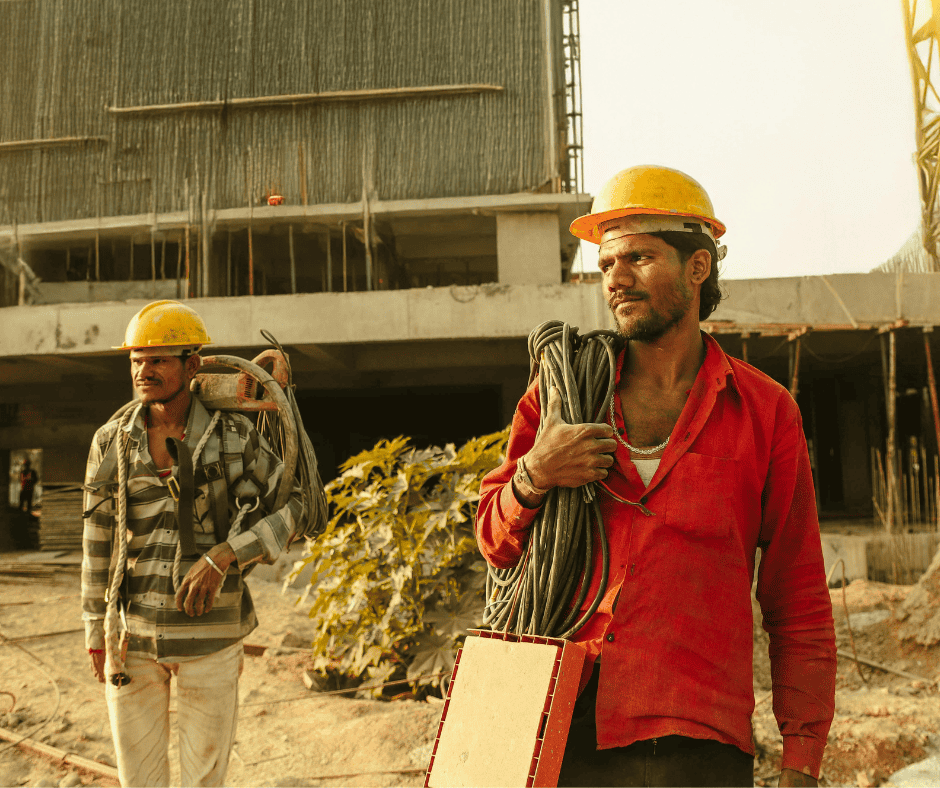
While domestic workers have their wages withheld inside and outside their private households, construction workers experience similar patterns of exclusion and nonpayment in highly visible public spaces. A third of the ten million Indian construction migrant workers employed in Gulf countries are from Kerala, and they significantly contribute to the state’s economic expansion, which is fueled by remittances sent back home to support their families.[92] To this day, about 700 Keralite construction workers in the Gulf have reported not receiving their paychecks, with the actual figure likely far higher due to the multiple countries that employ these laborers.[93]
Like the structural exclusion experienced by Keralite domestic workers, the lack of wages for construction workers stems from the complexity of the construction labor process.[94] There are numerous parties engaged in major construction projects, ranging from the customer to advisors and key contractors, as well as the levels of contracting and subcontracting along the supply chain.[95] Those employed by both major construction firms and labor supply companies often do not get paid because large companies and clients do not pay their contractors on time, leaving projects short of funds to pay the workers and on a “paid when paid” timeline.[96] To protect themselves against clients’ failure to fulfill their responsibilities, contractors also frequently withhold a portion of the payment, further reducing workers’ wages.[97] Despite the alleged implementation of the Wage Protection System and new laws allowing workers to switch employers if they haven’t been paid, workers still face major challenges in resolving pay disputes in practice.[98]
Entangled within the kafala sponsorship system, it is still less expensive to keep employees on and unpaid until they are required again than to terminate contracts and send them back once there are no projects, since employees are unable to shift jobs quickly and firms must pay significant recruitment fees under the Emigration Act.[99] Moreover, under this kafala system, despite alleged reform in countries such as Saudi Arabia, many workers are tied to their employers as they interfere with their ability to change jobs.[100] According to an unnamed construction worker, his supervisor forced him and his coworkers to sign a contract upon arrival in Saudi Arabia that required them to pay SAR 12,000 ($3,200) if they changed employers.[101] Another employee, a father of two, was promised a cleaning position with a base income of SAR 1,000 ($213) in exchange for more than $1,250 in recruitment costs.[102] However, his employer broke the conditions of his previous contract after he arrived in Saudi Arabia and forced him to sign a new one that required him to work in construction for a far lower wage of SAR 600 ($160).[103]
While many of these workers suffered in silence due to the lack of redress, this inequitable structure was subjected to international scrutiny when both COVID-19 and preparations for the 2022 FIFA World Cup worsened these effects within a year of each other. With borders closing and construction workers forced to stay in their host country during the lockdown, numerous employers exploited this circumstance, which resulted in a horrific violation of migrant workers’ rights, including, but not limited to, sudden terminations, improper pay deductions, withholding wages and benefits, unpaid leave, and worker abandonment.[104] Less than two years after the global pandemic exposed workers’ vulnerabilities, the development of large-scale projects, particularly preparations for the 2022 World Cup, spotlighted Qatar after it allegedly claimed it had labor protections for its workers, only to mislead them.[105]
c. Covid-19 Was a Crisis of Exposure, Not Disruption
The COVID-19 pandemic was not the cause of wage theft among Kerala migrant workers in the Gulf construction sector; rather, it highlighted how easily pay can be halted when companies faced increased financial strain.[106] Between June 2020 and December 2021, 745 workers lost up to $16.3 million in pay, averaging $21,946 per migrant worker.[107]
Combined with the lack of social support from their host nation, these workers received little legal support in obtaining justice for these inequities before and after returning to Kerala, due to the deficient infrastructure to address them.[108] Before COVID-19, many workers had pay disputes, but due to disruptions to the court process and diminished government capacity, resolving these conflicts is now much more challenging.[109] Because the UAE’s laws forbid workers from collectively organizing, bargaining, or striking, migrant construction workers also lack the freedom of association in their host countries.[110] It is challenging, costly, labor-intensive, ineffective, and often results in retribution against workers and their businesses when they approach the Labor Dispute Resolution Committees.[111] Qatar put in place a Wage Protection System (WPS) in 2015 to ensure migrant workers receive correct and timely compensation.[112] Pay infractions continued to rise under COVID-19, despite the WPS being promoted as an efficient tool to combat pay abuses, and many of these cases were dismissed.[113] In the same year, it also approved legislation creating the Workers’ Support and Insurance Fund to compensate them when they were unable to pay due to a ruling by the Labor Dispute Resolution Committees.[114] However, they are still inefficient, sluggish, and inaccessible.[115] The right to seek compensation appears nearly unattainable if migrant workers have no influence over their own visa status and are severely limited in their ability to work for another company to help support themselves and stay in the country.[116]
Once workers were able to return to their home state of Kerala, the right to seek compensation became even harder.[117] Because many claims required a power of attorney or a locally based agent to prosecute the case upon return, workers who left the Gulf frequently lost direct access to the judicial systems of their destination states.[118] Through Non-Resident Keralites’ Affairs (NORKA), Kerala established avenues for complaints, including toll-free numbers and reporting forms.[119] Nevertheless, these approaches yielded few successes because most cases still required action by foreign employers, embassies, or legal procedures in host states.[120] India’s failure to ratify important ILO conventions, such as the Migration for Employment Convention (No. 97)[121] and the Labor Clauses (Public Contracts) Convention (No. 94)[122], exacerbates this structural weakness by leaving migrant workers reliant on domestic frameworks that do not provide the necessary and binding assurances of legitimate labor rights.
d. 2022 FIFA World Cup Provided Visibility, but No Structural Transformation
Although Qatar’s labor standards came under intense international attention during the 2022 FIFA World Cup and in the following years, neither structural protection nor substantial compensation provided afterwards for the migrant construction workers who made the competition possible in the first place.[123] FIFA and Qatari officials themselves made many misleading claims before the 2022 event, stating that Qatar’s labor protection measures were sufficient to address any pervasive violations.[124] Both FIFA President Gianni Infantino and Qatar’s Labor Minister publicly cited the Workers’ Support and Insurance Fund as evidence that worker compensation was established before the tournament’s opening, demonstrating that the issue of worker welfare had been settled.[125] Shortly after, workers had come forward to the government with proof of wage theft, such as documents detailing the precise sums they were due, but they were never compensated by Qatari authorities.[126] Even when courts decided in their favor, many workers returned to their native countries because they could not continue to stay in Qatar while they waited for employers to compensate them or for the government to take action.[127] Following the end of the 2022 World Cup, the situation worsened: workers had no jobs for months due to the post-World Cup construction downturn, with fewer than a quarter of over sixty employees with assignments.[128] As a result, many workers were sent home on long unpaid leave with a small payment of wages and assured that they’d be informed when there was demand, a technique that many suspected intended to avoid repaying end-of-service benefits that accrued over a decade of employment.[129] Meanwhile, FIFA made $7.5 billion from the competition, making it both FIFA’s highest-grossing and fatal World Cup.[130] In 2024, a FIFA-commissioned assessment published stating that Qatar had experienced serious human rights repercussions, including fatalities and months of unpaid salaries; despite this, FIFA had confirmed that its $50 million legacy fund would go towards global development initiatives rather than paying these stadium construction migrant workers.[131] Thus, the World Cup reiterated what the pandemic had already begun to show: international scrutiny, unaccompanied by enforceable sending-state protections and host-country legal commitment, will only result in performative reform, which is inadequate to eliminate the institutional system that makes wage theft common among Kerala migrant construction workers.[132]
IV. Comparative Framework: Philippines’ Migrant Workers and Overseas Filipinos Act of 1995
A. Protection as a Condition of Deployment, Not an Afterthought
The Philippines’ Migrant Workers and Overseas Filipinos Act of 1995 (Republic Act No. 8042, as amended by Republic Act 10022) takes a very different approach than India’s Emigration Act of 1983: the sending state has an absolute, continuous duty to safeguard its workers not just at the time of departure, but during the entire time of their employment in their host country.[133] The Philippine Overseas Employment Administration (POEA) is explicitly disallowed by R.A 8042 from granting deployment licenses to nations that are unable to provide labor protection for their workers, adopt applicable global agreements, or have a bilateral contract with the Philippines that ensures these rights for employees.[134] Government officials who approve deployment without these protections risk being removed from their positions and disqualified from holding public office for five years.[135] The comparable restriction within India’s Emigration Act is a provision that allows the Protector General of Emigrants to refuse approval due to unfair terms or poor circumstances of the host country, but the task of navigating the lack of safeguards that may exist in the host country rests solely on the employee themselves, since there is no systemic need that the host country offers protections as a prerequisite for deployment.[136] Moreover, the exclusion of domestic and construction works from Gulf labor regulations that permit wage theft to continue would be considered grounds to restrict deployment if India, similar to the Philippines, had predicated it on the receiving country’s safeguards, rather than something that employees are left to learn after arriving for their employment.
B. Contract Substitution Constituting a Crime
Beyond the deployment requirements, the Philippines’ Migrant Workers and Overseas Filipinos Act of 1995 differs significantly in how it considers the validity of the employment contract itself, a distinction that is directly related to wage theft.[137] By classifying the substitution or modifications of a labor contract to the disadvantage of the worker without the Department of Labor and Employment’s consent as illegal hiring as a crime punishable by 6-12 years in prison and heavy fines, the Act specifically addresses the current problem migrant workers are facing of being obligated to sign contracts at reduced salaries with no legal remedy under the laws of their sending country.[138] This framework gives tangible legal ramifications to the same behavior that the Emigration Act allows completely uncontrolled by characterizing contract substitution as a crime rather than a civil dispute.[139]
C. Forum for Stolen Wages
The criminalization of contract substitution is only important if workers have an efficient domestic channel to pursue a claim to be compensated for this financial loss, and it is here where India’s framework severely falls short. However, the Philippines’ Migrant Workers and Overseas Filipinos Act of 1995 provides a provision that mediates this gap.[140] According to Section 10 of the Act, the National Labor Relations Commission has both original and exclusive jurisdiction to decide financial loss claims resulting from overseas job contracts within ninety days of filing.[141] The employer and hiring agency are liable for those claims jointly and severally, meaning that an employee may sue any of the parties for the total sum owed.[142] In the event that an employer receives a final ruling against the hiring agency, the employer is immediately barred from taking part in the foreign employment program until the judgment is fulfilled and the compensation is given.[143] None of this is provided by the Emigration Act: its enforcement mechanisms generally address deceptive hiring and unlawful emigration, but they do not create a domestic forum of law in India with authority over wage disputes that arise while abroad.[144] As a result, returning Keralite citizens are left in the position of being legally bound by wages that they will never get back.
D. Anticipation of Employer Default
The lack of a domestic forum is emphasized by the Emigration Act’s failure to take into consideration the financial risk that workers encounter when conflicts arise in the Gulf, which was proven especially disastrous during the pandemic and post-World Cup construction downturn, where workers were left unpaid and struggled to pay for the expense of filing legal claims. The Philippine framework views this as a predictable danger inherent in the foreign employment arrangement rather than as an extraordinary problem.[145] According to the act, every deployed worker must have mandatory insurance that covers accidental death, permanent disability, return expenses in the event of wrongful discharge, and a minimum living stipend for workers engaged in overseas litigation.[146] Moreover, this insurance must be obtained at no cost to the employee.[147] In contrast, while the Emigration Act may require hiring agents to keep track of pay records, it does not establish an adequate system to fulfill such claims when the employers fail to pay.[148]
Overall, these four aspects of the Philippines’ Migrant Workers and Overseas Filipinos Act of 1995—deployment conditions, criminal sanctions for contract substitutions, a domestic forum for stolen wages, and mandatory insurance—form a logical legislative system on the basis that wage theft is an expected result of systemic risk that the sending state must prepare for. India has the capacity to create a similar system because it already has the Protector General of Emigrants, a network of regional emigration offices, and bilateral labor agreements with several Gulf states[149] that could be used as the basis for the former. The Emigration Act not only lacks these advanced administrative provisions, but it also lacks the underlying legislative intent that drives them, in which the Philippine Act is explicitly premised on the country’s obligation to protect its workers, and the Emigration Act is premised on the country’s authority to regulate their movement.
V. Proposals
A. Amending the Emigration Act to Establish Deployment Prerequisites and Domestic Wage Claim Forum
India’s first targeted fix should be on implementing a statutory provision of mandated deployment prerequisites, modeled by Section 4 of the Philippines’ Migrant Workers and Overseas Filipinos Act of 1995, which requires the receiving country to have proven labor standards for migrant workers before deployment licenses may be issued.[150] In addition to facilitating bilateral cooperation in regulating the entire migration cycle, India’s bilateral labor contracts and memoranda of understanding with GCC nations must specifically incorporate the host nations’ labor laws.[151] This provision would allow India to have a legal foundation that can demand Gulf governments to adhere to particular labor standards, changing a foreign choice into a binding condition for market access and reducing the vulnerability migrant workers face from employers abroad.[152] These agreements are currently weak because there is no legal approach for India to halt the supply of labor for noncompliance, and amending the Emigration Act to include host country safeguards before deployment would change this, forcing the Gulf states’ reliance on Indian domestic and construction work to provide significant incentives to comply.[153]
To give these deployment conditions and bilateral agreements power in the sending country, the Emigration Act should be modified to create a domestic adjudicatory forum with original jurisdiction over wage claims deriving from foreign employment contracts, with joint and several liability, modeled by Section 10 of the Philippines’ Migrant Workers and Overseas Filipinos Act of 1995.[154] Gulf authorities associated with enforcement and settling disputes should be knowledgeable about approaching wage theft violations, and workers should have access to effective reparation and conflict resolution channels.[155] This kind of forum provided by India would close the gap that is currently present between India’s bilateral agreements with the Gulf and the Emigration Act, providing Keralite workers with a legally enforceable recourse that is independent of foreign employers, foreign courts, and power of attorney limitations, which consistently prevent claims once workers return home.[156]
B. Ratification of ILO Conventions in Conformity with Global Labor Standards
What India can do as a nation is addressed by amending the Emigration Act, but it does not address what India has declined to commit to internationally. A reformed Emigration Act operating without commitment to international labor standards may still leave Keralite workers vulnerable due to a lack of ability to depend on binding international obligations that neither India nor the Gulf Countries could withdraw from.
i. ILO Convention No. 97: Migration for Employment Convention
The Migration for Employment Convention (No. 97) requires equitable treatment between nationals and regular migrants in recruiting processes, living and working circumstances, access to justice, and contract terms.[157] A sample bilateral contract that offers an effective framework for the enforceable bilateral obligations is included in Convention No. 97’s accompanying Recommendation No. 86, which encourages the formation of bilateral employment contracts between nations where there is a high population flow of migrant workers.[158] Thus, ratifying this convention would strengthen India’s position both internationally and domestically.
ii. ILO Convention No. 94: Labour Clauses in Public Contracts
The Labour Clauses in Public Contracts (No. 94) require that when a government issues a public contract, such as construction, commodities, or the provision of services, it must establish that workers on the project must receive the same wages and conditions as local workers performing comparable jobs.[159] If India had ratified before the 2022 FIFA World Cup, it could have addressed the contractual framework that leads to wage theft in the construction sector, especially the “pay-when-paid” structure and multilayer subcontracting chains that kept Keralite workers underpaid for years post the event. Therefore, India’s ratification of this convention would enable it to demand that Gulf governments incorporate enforceable wage provisions in public building contracts that use Keralite migrant workers, turning unenforceable assurances into binding commitments subject to international standards and adding an extra layer of protection for these workers.
iii. ILO Convention No. 189: Domestic Workers
Similar to ILO Convention No. 94 strengthening protections for construction workers, ILO Convention No. 189 strengthens protections for domestic workers by entitling domestic workers to the same rights as other workers in various sectors, such as days off, working day limits, minimum wage coverage, overtime compensation, social security, and clear terms and conditions of employment.[160] India’s progress in ratifying this convention has been controversial.[161] In Parliament, India’s Labour Minister affirmed that domestic labor is largely the responsibility of state administrations and not the federal administration, and that the government has not signed Convention No. 189 because national norms and regulations do not comply with its terms.[162] However, this logic negates the purpose of treaty ratification, which is to establish the duty to bring domestic legislation into compliance, not to wait idly until compliance already exists.[163] Some nations choose to align their laws with a convention even if they choose not to ratify it; these nations utilize the ILO’s standards as a guide when creating their laws and policies.[164] Thus, India’s ratification of this agreement is not a novel notion; dozens of other countries in similar situations have previously done so.
VI. Conclusion
Keralite domestic and construction workers have supported one of the biggest labor movements in South Asia for more than 50 years, yet the legal system that governs their migration has failed significantly. The wage theft that occurs in both Kuwaiti and Bahraini private homes and at Saudi Arabian and Qatari construction sites is not only the result of employer misbehavior, but rather of a sending-country legislation that controls mobility without safeguarding the employees. Amending the Emigration Act to establish both deployment prerequisites and a domestic wage theft adjudicatory forum, as well as ratifying ILO Conventions No. 97, No. 94, and No. 189. would transform the administrative framework to a workers’ rights-based one. To support their families and take advantage of possibilities that are not accessible in the home economy, Keralite domestic and construction workers move in search of financial stability. Therefore, it is not only desirable but also essential to have a framework that effectively supports and safeguards them throughout their migration for a better future.
[1] Svanika Balasubramanian, Across Oceans: The Lives of Migrant Workers in the Middle East, Pulitzer Center (Feb. 11, 2019), https://pulitzercenter.org/stories/across-oceans-lives-migrant-workers-middle-east
[2] Id.
[3] Dr. Thejas Thomas, Dr. Akkara Sherine, Study on the 9th Century Kerala Migrants and The Evolution of Kerala-Gulf Diaspora (2023) (Kristu Jayanti College, Bangalore).
[4] M.H. Ilias, Memories and Narrations of “Nations” Past: Accounts of Early Migrants from Kerala in the Gulf in the Post-Oil Era (2014) (Arab Center for Research and Policy Studi
[5] Nandini Paliyath, Migration, Consumption and Gender: The Case of Rural Kerala (2019) (Journal of Migration Affairs).
[6] Id.; see also Anagha E and Chapparban Sajaudeen Nijamodeen, Kerala – Gulf Migration Corridor: Women’s Labour and Gender Stereotypes, 1 – 6 (June 2024) (Ctr. for Diaspora Studies, Central University of Gujarat), https://thirdvoice.voiceforvoiceless.in/wp-content/uploads/2024/09/Kerala-Gulf-Migration-Corridor.pdf.
[7] The practice by an employer of not paying the proper wages due to a worker or workers.
[8] The absence or insufficiency of payment, reward, or restitution for labor, services or losses.
[9] Rothna Begum, I Already Bought You, Human Rights Watch (2014), https://www.hrw.org/report/2014/10/22/i-already-bought-you/abuse-and-exploitation-female-migrant-domestic-workers.
[10] Orchie Bandyopadhyay, India’s overseas migrant workers: exploitation remains a problem, British Safety Council (July 7, 2024), https://www.britsafe.in/safety-management-news/2024/india-s-overseas-migrant-workers-exploitation-remains-a-problem.
[11] The Emigration Act, 1983 (India).
[12] Anand Panamthottam Cherian and S. Irudaya Ragan, Migrant Vulnerabilities: ‘Guest Workers’ in Kerala (2024) (Indian Journal of Human Development).
[13] B.A. Prakash, Gulf Migration and Its Economic Impact: The Kerala Experience, 33 (50) Econ. & Pol. Wkly. 3209, 3210–12 (Dec. 12, 1998).
[14] Id.
[15] Id.
[16] Fred Halliday, Labor Migration in the Arab World, Merip (May 22, 1984), https://www.merip.org/1984/05/labor-migration-in-the-arab-world/.
[17] M.H. Ilias, supra note 4.
[18] K.S Hari and K.P Hannan, Kerala’s Gulf Connection Emigration, Remittances and their Macroeconomic Impact 1972-2000 (March 2002) (Centre for Dev. Studies, Thiruvananthapuram).
[19] B.A Prakash, Kerala’s Economic Development: Issues and Problems (June 2000) (The Pakistani Development Review).
[20] Bhawna Kalani, Indian Women Migration: An Age of Movement Towards Gulf, 2 Int’l J. Applied Res. 108, 109-10 (2016).
[21] Anagha E and Chapparban Sajaudeen Nijamodeen, supra note 6.
[22] Kathryn Gerry, We Become Capable of Handling Everything: Gender and Gulf Migration in Kerala, South India, 11 The Journal of Undergraduate Ethnography 36, 37-39 (2021).
[23] Id.
[24] Walk Free, Disempowered, Dehumanised, Deported: Life Under the Kafala System, Walk Free, https://www.walkfree.org/global-slavery-index/findings/spotlights/life-under-the-kafala-system/.
[25] Id.
[26] Global Slavery Index, Disempowered, Dehumanized, Deported: Life Under The Kafala System, Walk Free, https://www.walkfree.org/global-slavery-index/findings/spotlights/life-under-the-kafalasystem/#:~:text=of%20domestic%20servitude-,What%20is%20the%20kafala%20system?,and%20the%20absence%20of%20interpreters.
[27] Brooke Sherman, Changing the Tide for Gulf’s Migrant Workers, Wilson Center (June 6, 2022), https://www.wilsoncenter.org/article/changing-tide-gulfs-migrant-workers?utm_source.
[28] Kali Robinson, What Is the Kafala System?, Council on Foreign Relations (Nov. 18, 2022, 12:21 PM), https://www.cfr.org/backgrounder/what-kafala-system.; see also Daria Gusa, Kafala: The Hidden Engine Driving Gulf Economic Development, Middle East Political and Economic Institute (June 23, 2024), https://mepei.com/kafala-the-hidden-engine-driving-gulf-economic-development/.
[29] Id.
[30] Id.
[31] How Can We Work Without Wages, Human Rights Watch (August 24, 2020), https://www.hrw.org/report/2020/08/24/how-can-we-work-without-wages/salary-abuses-facing-migrant-workers-ahead-qatars.
[32] Id.
[33] Id.; see also The Kafala System in Saudi Arabia, European Centre for Democracy and Human Rights (2025), https://www.ecdhr.org/the-kafala-system-in-saudi-arabia/.
[34] Human Rights Watch, supra note 31.
[35] Nina Weidenauer, Pay-When-Paid Clauses in Construction, Foundamental (June 3, 2025), https://www.foundamental.com/perspectives/pay-when-paid-clauses-in-construction (describing how construction projects contain pay-when-paid clauses that lets a contractor to postpone paying a subcontractor until the contractor itself receives payment from the party above it in the chain). All subcontractors and their employees may not get payment for months even if they have finished their job if the owner withholds or contests payment to the main contractor.
[36] Human Rights Watch, supra note 31.
[37] Dumoulin, supra note 36.
[38] The Emigration Act, 1983 (India).
[39]International Labour Office, Indispensable Yet Unprotected: Working Conditions of Indian Domestic Workers At Home and Abroad (2015), https://www.ilo.org/sites/default/files/wcmsp5/groups/public/%40ed_norm/%40declaration/documents/publication/wcms_378058.pdf.
[40] Sudhaveni Naresh, India’s Emigration Act: Its Emergence and Changes, 6 Int’l Research J. Mgmt. Soc. & Humanity 49 (2015), https://www.academia.edu/19534749/India_s_Emigration_Act_Its_Emergence_and_Changes.
[41] Id.
[42] Nikhil Eapen, How India Cut Minimum Wages For Gulf-Bound Migrants In The Pandemic, Article 14 (Feb. 4, 2021), https://www.article-14.com/post/how-india-cut-minimum-wages-for-gulf-bound-migrants-in-the-pandemic.
[43]S Irudaya Rajan and Balasubramanyam Pattath, Distress Return Migration Amid Covid-19: Kerala’s Response, National Library of Medicine (June 31, 2022), https://pmc.ncbi.nlm.nih.gov/articles/PMC9379595/.
[44] Id.
[45] Id.
[46] Id.
[47] Nikhil Eapen, No pay for 5 months, passports withheld: Indians stranded in Kuwait plead for help, The News Minute (Aug. 9, 2020 9:18 PM), https://www.thenewsminute.com/news/no-pay-5-months-passports-withheld-indians-stranded-kuwait-plead-help-130392.
[48] Parvathy Devi. K, Woes of Return: Study on Wage Theft Among Kerala Migrant Workers in GCC Countries, Global South Colloquy (Aug. 1, 2021), https://globalsouthcolloquy.com/woes-of-return-study-on-wage-theft-among-kerala-migrant-workers-in-gcc-countries/.
[49] S Irudya Rajan and C.S Akhil, Empty-Handed and Demoralized: New Evidence of Wage Theft Among Indian Return Migrants During Covid-19, Imad (July 2021), https://iimad.org/wp-content/uploads/2021/08/DRAFT_PB-3-India-WT.pdf.
[50]Anagha E and Chapparban Sajaudeen Nijamodeen, supra note 6.
[51] Id.
[52] Id.
[53] Bhanu Sridharan, Domestic Workers Face Issues Like Wage Theft, Harassment, but Have No One to Complain to, Citizen Matters (August 11, 2023), https://citizenmatters.in/domestic-workers-workers-rights-union-wages-police-harassment-sexual-harrasment-akkai-padmashali-sowmya-reddy-employers/.
[54] Indispensable Yet Unprotected: Working Conditions of Indian Domestic Workers at Home and Abroad supra note 39.
[55] Id.; See also Arokkiaraj H. & S. Irudya Rajan, Trafficking to Gulf Countries: The Lived Experiences of Indian Female Domestic Workers (Mar. 31, 2021), https://doi.org/10.14431/aw.2021.3.37.1.119.
[56] Indispensable Yet Unprotected: Working Conditions of Indian Domestic Workers at Home and Abroad supra note 39.
[57] Id.
[58] A Comparison of End-of-Service Benefits For Domestic Workers In The Gulf, Mrrors (September 26, 2023), https://www.mrrors.org/2023/09/a-comparison-of-end-of-service-benefits-for-domestic-workers-in-the-gulf/.
[59] Rothna Begum, Migrant Domestic Workers: Underprotected and Overworked, Human Rights Watch (June 15, 2016, 11:53 AM), https://www.hrw.org/news/2016/06/15/migrant-domestic-workers-overworked-and-underprotected.
[60] Id.
[61] Id.
[62] Id.
[63] Hana Buhejji, Slavery Entrenched by Law: Depriving Migrant Workers of Their Wages in the Gulf, Arab Reporters for Investigative Journalism (ARIJ) (January 18, 2022), https://arij.net/investigations/wagetheftinthegulf/en/.
[64] Id.
[65] Id.
[66] A Comparison of End-of-Service Benefits for Domestic Workers in the Gulf supra note 58.
[67] Id.
[68] Id.
[69] Buhejji supra note 63.
[70] Id.
[71] Id.
[72] Id.
[73] Understanding the Emigration Act of 1983, Allian Zehr, https://allianzehr.com/understanding-the-emigration-act-1983/.
[74] Human Rights Watch, supra note 31.
[75] Id.
[76] Id.
[77] Id.
[78] International Trade Union Confederation, Facilitating Exploitation: A Review of Labour Laws for Migrant Domestic Workers in Gulf Cooperation Council Countries, Ituc Csi Igb (2017), https://www.ituc-csi.org/IMG/pdf/migrant_domestic_workers_in_gulf_final-2.pdf.
[79] Id.
[80] Id.
[81] Id.
[82] Understanding the Emigration Act of 1983, supra note 73.
[83] International Trade Union Confederation, supra note 78.
[84] Id.
[85] Id.
[86] Id.
[87] Understanding the Emigration Act of 1983, supra note 73.
[88] International Trade Union Confederation, supra note 78.
[89] The Emigration Act, 1983, Kanoon, https://indiankanoon.org/doc/99408546/ ; See also Facilitating Exploitation: A Review of Labour Laws for Migrant Domestic Workers in Gulf Cooperation Council Countries supra note 111.
[90] Id.
[91] Id.
[92] Ignatius Chithelen, Will Kerala’s Economy be Hit by Coming Decline in Persian Gulf Labor Demand, Global Indian Times (Jan. 23, 2026), https://www.globalindiantimes.com/p/kerala-migrants-persian-gulf.
[93] Ashwin Kumar & Akhil C.S., How Migrants in the Gulf Are Fighting Discrimination During the Pandemic, Open Democracy (April 8, 2021, 9:44 AM), https://www.opendemocracy.net/en/openindia/how-migrants-gulf-are-fighting-discrimination-during-pandemic/.
[94] International Labour Organization, Engagement With the Construction Sector in the Arab States, International Labour Organization, https://www.ilo.org/projects-and-partnerships/projects/engagement-construction-sector-arab-states#:~:text=marks@ilo.org-,Project%20information,work%20for%20migrant%20construction%20workers.
[95] Id.
[96] Human Rights Watch, Qatar: Failure to Pay Contractors Harms Migrant Workers, Human Rights Watch (December 14, 2025), https://www.hrw.org/news/2025/12/14/qatar-failure-to-pay-contractors-harms-migrant-workers.
[97] Id.
[98] Mrrors, ILO Exploratory Study on Protecting Construction Workers, Mrrors (May 30, 2018), https://www.mrrors.org/2018/05/ilo-exploratory-study-on-protecting-construction-workers/.
[99] Human Rights Watch, supra note 96.
[100] Human Rights Watch, Die First, and I’ll Pay You Later, Human Rights Watch (Dec. 4, 2024), https://www.hrw.org/report/2024/12/04/die-first-and-ill-pay-you-later/saudi-arabias-giga-projects-built-widespread.
[101] Id.
[102] Id.
[103] Id.
[104] Parvathy Devi. K, Woes of Return: Study on Wage Theft Among Kerala Migrant Workers in GCC Countries, Global South Colloquy (Aug. 1, 2021), https://globalsouthcolloquy.com/woes-of-return-study-on-wage-theft-among-kerala-migrant-workers-in-gcc-countries/.
[105] Qatar: Six Months Post-World Cup, Migrant Workers Suffer, Human Rights Watch (June 16, 2023, 10:30 AM), https://www.hrw.org/news/2023/06/16/qatar-six-months-post-world-cup-migrant-workers-suffer.
[106] William Gois, How the Pandemic Escalated Migrant Worker Wage Theft in the Gulf, Thomas Reuters (Dec. 9, 2021), https://news.trust.org/item/20211209192309-b8wzo/.
[107] Ananya Bhattacharya, South Asian Migrant Workers Lost $25 million in Wage Theft During the Pandemic, Quartz (July 20, 2022), https://qz.com/india/2131115/south-asian-migrants-lost-25-million-to-pandemic-wage-theft.
[108] Marcelle Louw, Covid-19 and Migrant Workers in the Gulf, Global Investigative Journalism Network (Nov. 26, 2021), https://gijn.org/resource/chapter-2-covid-19-and-migrant-workers-in-the-gulf/#:~:text=While%20the%20Gulf%20states%20have,by%20the%20pandemic’s%20economic%20crisis.
[109] Id.
[110] Human Rights Watch, supra note 31.
[111] Id.
[112] Mrrors, Qatar’s Performance Reports On Labour Law Reforms Raises Concern Of Regressing On Commitments, Mrrors (Dec. 4, 2023), https://www.mrrors.org/2023/12/qatars-performance-reports-on-labour-law-reforms-raises-concern-of-regressing-on-commitments/.
[113] Id.
[114] Id.
[115] Id.
[116] Id.
[117] S Irudaya Rajan and Balasubramanyam Pattath, supra note 43.
[118] Ashwin Kumar & Akhil C.S., supra note 93; See also Anuradha Nagaraj & Naimul Karim, South Asian Migrant Workers Seek Justice As Wage Theft Worsens Under Coronavirus, Thomas Reuters (Sept. 9, 2020, 9:00 AM), https://www.reuters.com/world/insight-south-asian-migrant-workers-seek-justice-wage-theft-worsens-under–trfn-2020-09-09/.
[119] S Irudya Rajan and C.S Akhil, supra note 49.
[120] Cris, Wage Theft: 397 Kerala NRIs Lost Rs 62 Cr in Wages and Benefits, The News Minute (Aug. 13, 2021, 4:52 AM), https://www.thenewsminute.com/kerala/wage-theft-397-kerala-nris-lost-rs-62-cr-wages-and-benefits-153866.
[121] Int’l Labor Org. [ILO], Migration for Employment Convention (Revised) (No. 97) (July 1, 1949), https://normlex.ilo.org/dyn/nrmlx_en/f?p=NORMLEXPUB:12100:0::NO:12100:P12100_INSTR UMENT_ID:312242:NO (requiring that migrant workers be afforded treatment no less favorable than that given to nationals in respect of wages, conditions of work, and membership of trade unions).
[122] Int’l Labor Org. [ILO], Labour Clauses (Public Contracts) Convention (No. 94) (June 29, 1949), https://normlex.ilo.org/dyn/nrmlx_en/f?p=NORMLEXPUB:12100:0::NO:12100:P12100_INSTR UMENT_ID:312239:NO (requiring public contracts to contain clauses that ensure fair wages, working hours, and other working conditions that are not less favorable than the conditions established for work with a similar grade in the relevant trade or district).
[123] Human Rights Watch, Qatar: Six Months Post-World Cup, Migrant Workers Suffer supra note 51.
[124] Human Rights Watch, FIFA: No Remedy for Qatar Migrant Worker Abuses, Sport & Rights Alliance (Nov. 20, 2023), https://sportandrightsalliance.org/fifa-no-remedy-for-qatar-migrant-worker-abuses/.
[125] Id.
[126] Human Rights Watch, Qatar: Six Months Post-World Cup, Migrant Workers Suffer supra note 164.
[127] Id.
[128] Id.
[129] Human Rights Watch, FIFA: No Remedy for Qatar Migrant Worker Abuses, supra note 166.
[130] Ellen Hughes, The True Cost of the 2022 World Cup: How Qatar’s Migrant Workers Paid the Price, Sussex Centre for Migration Research (Feb. 10, 2025), https://blogs.sussex.ac.uk/sussex-centre-for-migration-research/2025/02/10/2022worldcup/.
[131] Juliana Kim, FIFA Should Pay Workers Harmed in Building World Cup Venues, Its Committee Report Says, NPR (Nov. 30, 2024, 8:00 PM), https://www.npr.org/2024/11/30/nx-s1-5211297/soccer-qatar-world-cup-saudi-arabia-human-rights.
[132] Human Rights Watch, Qatar: Six Months Post-World Cup, Migrant Workers Suffer supra note 105.
[133] Migrant Workers and Overseas Filipinos Act of 1995, Rep. Act No. 8042, (June 7, 1995) (Phil.), https://library.laborlaw.ph/r-a-8042-migrant-workers-and-overseas-filipinos-act-of-1995/.
[134] Id at Section 4.
[135] Id.
[136] The Emigration Act, 1983 (India).
[137] Supra note 133.
[138] Id. at Section 6(i); Id. at Section 7(c).
[139] Id.
[140] Supra note 133.
[141] Id. at Section 10.
[142] Id.
[143] Id.
[144] Supra note 136.
[145] Supra note 133 at Section 37(A), subparagraphs (a), (c), (d), and (e).
[146] Id.
[147] Id.
[148] Supra note 136.
[149] Id.
[150] Supra note 133 at Section 4.
[151] Piyasiri Wickramasekara, Good Practices and Provisions in Multilateral and Bilateral Labor Agreements and Memoranda of Understanding, ResearchGate (Jan. 2018), https://www.researchgate.net/publication/345747518_Good_Practices_and_Provisions_in_Multilateral_and_Bilateral_Labor_Agreements_and_Memoranda_of_Understanding.
[152] Id.
[153] Id.
[154] Supra note 141.
[155] International Labour Organization, Wage Protection Systems in the Gulf Cooperation Council Countries: A Regional Analysis, International Labour Organization (2025), https://www.ilo.org/sites/default/files/2025-11/ILO_Beirut_Wage-Protection_Report_R10.pdf.
[156] Id.
[157] Supra note 121.
[158] Int’l Labor Org. [ILO], Migration for Employment Recommendation (Revised) (No. 86) (1949), https://normlex.ilo.org/dyn/nrmlx_en/f?p=1000:12100:0::NO::P12100_INSTRUMENT_ID,P12100_LANG_CODE:312424,fr:NO.
[159] Supra note 122.
[160] Int’l Labor Org. [ILO], Domestic Workers Convention (No. 189) (June 16, 2011), https://www.clr.africanchildforum.org/International%20Instruments/legal-instruments_ilo189_2011_en.pdf.
[161] The Economic Times, India Doesn’t Ratify ILO Convention on Domestic Workers: Bandaru Dattatreya, The Economic Times (Mar. 18, 2015, 6:32 PM), https://economictimes.indiatimes.com/news/economy/policy/india-doesnt-ratify-ilo-convention-on-domestic-workers-bandaru-dattatreya/articleshow/46610697.cms.
[162] Id.
[163] Mario Mendez, The Legal Effects of Treaties in Domestic Legal Orders and the Role of Domestic Courts, Oxford Academic (May. 23, 2013), https://doi.org/10.1093/acprof:oso/9780199606610.003.0002.
[164] International Labour Organization, How International Labour Standards Are Used, International Labour Organization, https://www.ilo.org/international-labour-standards/how-international-labour-standards-are-used.
rokers, carriers, and their counsel are familiar with the differences in interpretation of corrosion exclusions.
About The Author
Anika Jacob, J.D. Candidate 2027, at the University of Houston Law Center, is the first place winner of the annual Human Rights Essay Contest – also known as the “Thomas H. Wilson Scholarship Award” sponsored by the State Bar of Texas International Law Section’s International Human Rights Committee (IHRC). As a native of Kerala, India, with family members working within the Gulf migration system, this topic holds both personal and professional significance to her. Anika is a rising third-year law student at the University of Houston Law Center, where she has an interest in pursuing civil litigation and labor and employment law. She is a member of the Houston Journal of International Law and will serve as a Senior Articles Editor in the upcoming academic year. She is also the Co-Founder and Secretary of the South Asian Student Law Association.